Trolley Payouts: Complete Guide to Global Mass Payments and Automated Disbursements
 ricel6914@gmail.com
Introduction
In the modern digital economy, businesses increasingly rely on distributed workforces, global contractors, affiliates, and marketplace sellers. Managing international disbursements manually is time-consuming and risky.
This is where Trolley payouts come into play.
Trolley is a payment infrastructure platform designed to help companies automate large-scale payouts while maintaining compliance and operational efficiency. From gig platforms to SaaS marketplaces, organizations use Trolley to streamline how they send money worldwide.
This guide explains how Trolley payouts work, what features businesses benefit from, and why automated payout systems are becoming essential in 2026 and beyond.
What Is Trolley?


4
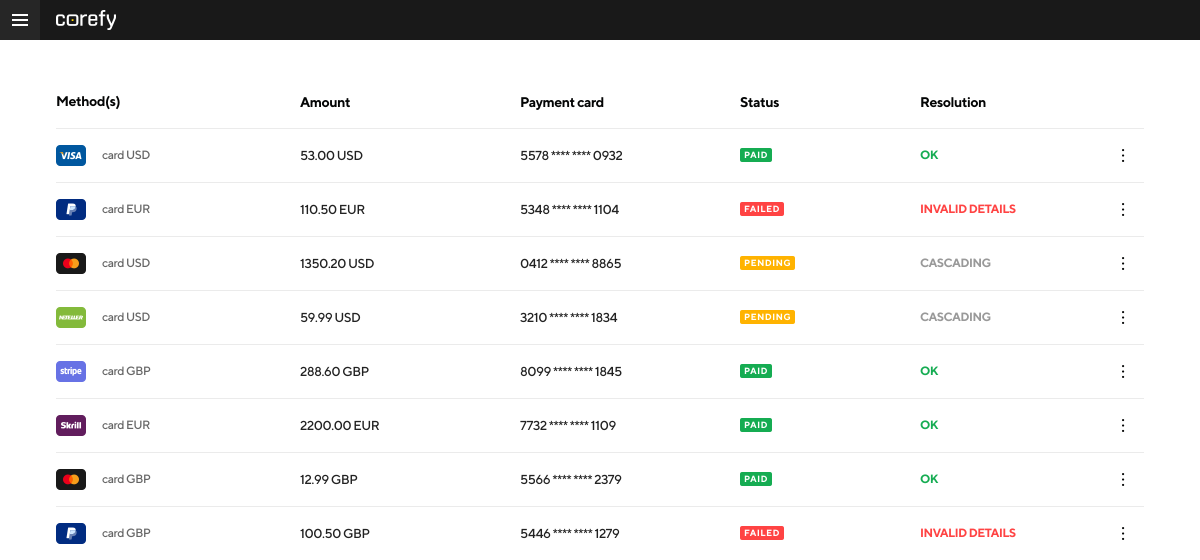
Trolley is a fintech platform that provides payout automation, tax compliance tools, and global disbursement infrastructure for online businesses.
Instead of manually sending bank transfers or managing fragmented systems, companies integrate Trolley to:
- Send mass payouts globally
- Collect tax forms digitally
- Validate recipient data
- Automate payment workflows
- Reduce compliance risk
Trolley payouts are commonly used by:
- Marketplaces
- Creator platforms
- Affiliate networks
- Gig economy apps
- SaaS ecosystems
How Trolley Payouts Work
Understanding how Trolley payouts function helps clarify why companies adopt automated systems instead of manual payment processing.
1. Recipient Onboarding
Businesses invite payees (contractors, sellers, creators) to securely submit:
- Bank details
- Tax forms
- Identification data
Trolley validates the information to reduce errors and failed transfers.
2. Payment Method Selection
Trolley supports multiple payout options depending on region, such as:
- Local bank transfers
- International wire transfers
- Digital wallet integrations
- ACH payments (for U.S. recipients)
This flexibility allows companies to scale globally without maintaining separate systems per country.
3. Automated Disbursement
Once payment files are approved, Trolley processes payouts in batches. Businesses can:
- Schedule recurring payouts
- Trigger payments based on milestones
- Manage approvals through role-based access
4. Compliance & Reporting
Tax document collection and reporting features help companies meet regulatory requirements across jurisdictions.
Key Features of Trolley Payouts
Here are the most relevant features businesses evaluate:
Global Coverage
Trolley supports payouts in many countries, reducing friction for platforms with international users.
Tax Form Collection
Companies can digitally collect and manage:
- W-9 forms
- W-8BEN forms
- Other relevant tax documentation
This simplifies contractor onboarding and year-end reporting.
Fraud Prevention & Validation
Built-in validation tools help reduce:
- Incorrect bank entries
- Duplicate payees
- Payment reversals
API & Platform Integration
Trolley provides API access so companies can integrate payouts directly into:
- Marketplace dashboards
- Creator portals
- Internal finance systems
Who Uses Trolley Payouts?
Trolley payouts are commonly adopted by:
Digital Marketplaces
Platforms that connect buyers and sellers need automated payout processing.
Creator & Influencer Platforms
Companies that compensate creators monthly or per campaign require scalable mass payments.
Affiliate Networks
Affiliate programs with thousands of partners benefit from automated commission distribution.
SaaS Platforms
Software companies paying revenue shares or referral incentives can centralize disbursements.
Benefits of Using Trolley Payouts
Businesses typically choose automated payout infrastructure for the following advantages:
1. Operational Efficiency
Manual wire transfers do not scale. Automated payout systems reduce administrative workload and human error.
2. Compliance Simplification
Managing tax documentation across jurisdictions becomes easier with centralized tracking.
3. Faster Payment Cycles
Batch processing allows companies to distribute funds consistently and predictably.
4. Improved Recipient Experience
Payees can securely select payment methods and track payout status.
Trolley Payouts vs. Traditional Bank Transfers
| Feature | Traditional Transfers | Trolley Payouts |
|---|---|---|
| Manual entry required | Yes | No |
| Mass payment automation | Limited | Yes |
| Integrated tax collection | No | Yes |
| API integration | Rare | Yes |
| Global scalability | Complex | Streamlined |
Automated payout platforms remove the need to manage multiple banking relationships manually.
Is Trolley Payouts Secure?
Security is a major concern when managing global disbursements. Trolley uses modern encryption standards and structured access controls to protect financial data.
Companies should always conduct their own due diligence and compliance review before adopting any payout solution.
SEO Insight: Why “Trolley Payouts” Is a Growing Search Term
Search interest around payout automation is increasing due to:
- Growth of gig economy platforms
- Rise of global remote work
- Expansion of creator monetization
- International SaaS scaling
Businesses are actively searching for scalable solutions that combine payments and compliance into one workflow.
Frequently Asked Questions
What are Trolley payouts used for?
Trolley payouts are used to automate mass payments to contractors, creators, affiliates, and marketplace sellers worldwide.
Does Trolley support international payments?
Yes, the platform supports multi-country payouts, depending on regulatory and banking coverage.
Can small businesses use Trolley payouts?
Trolley is typically used by platforms and growing digital businesses, but eligibility depends on company size and integration needs.
Final Thoughts
As online platforms scale globally, payout automation is no longer optional — it is infrastructure.
Trolley payouts provide a structured way to:
- Automate global disbursements
- Manage tax documentation
- Reduce compliance complexity
- Improve recipient payment experience
For marketplaces, SaaS platforms, and digital ecosystems, payout infrastructure plays a central role in sustainable growth.